
Compute headroom.
Concurrent retrieval, inference, ingestion, analysis, graph operations, deterministic computation, and scheduled work — without turning every useful question into a queue.
01 / Summit / Institutional Intelligence
Summit is the infrastructure that finally holds it — the evidence, the authority, the relationships, the operating history your institution spent decades earning.
A custom intelligence environment engineered from the institution outward, governed locally, and built to outlive the models and interfaces that first carried it.
Institution-scale engagement / Starting at $250,00002 / Product visual system
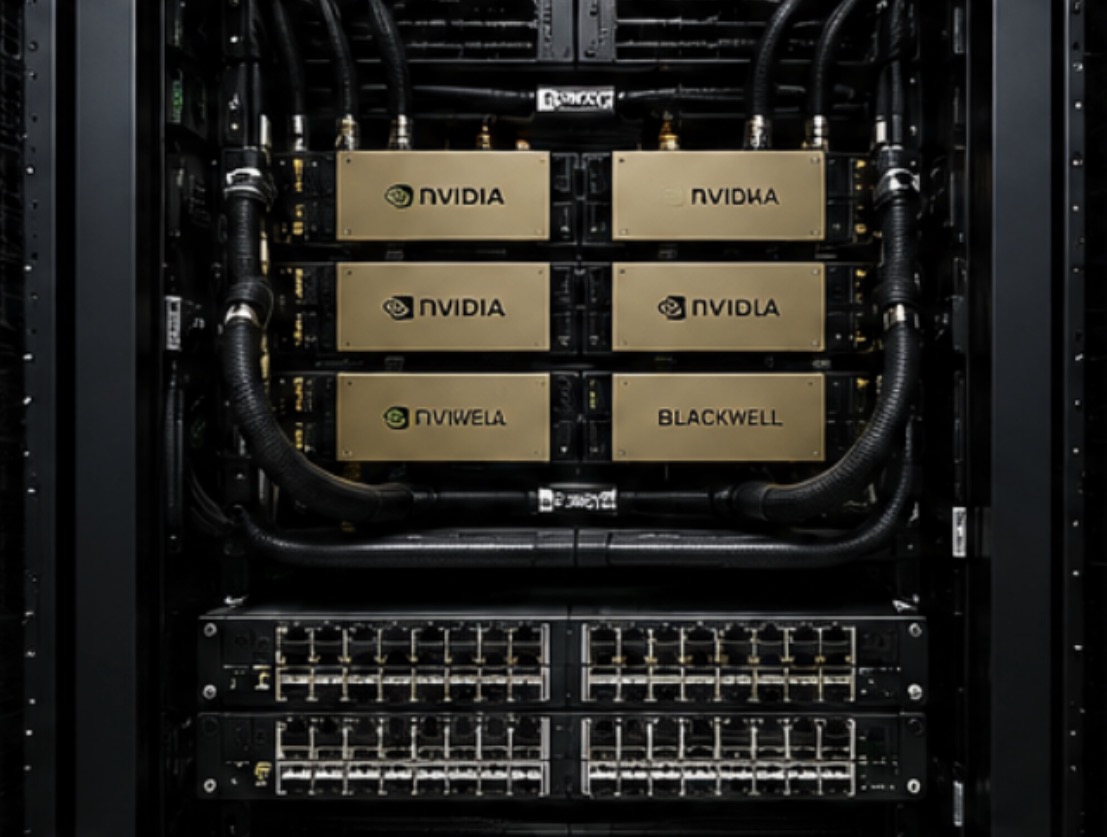
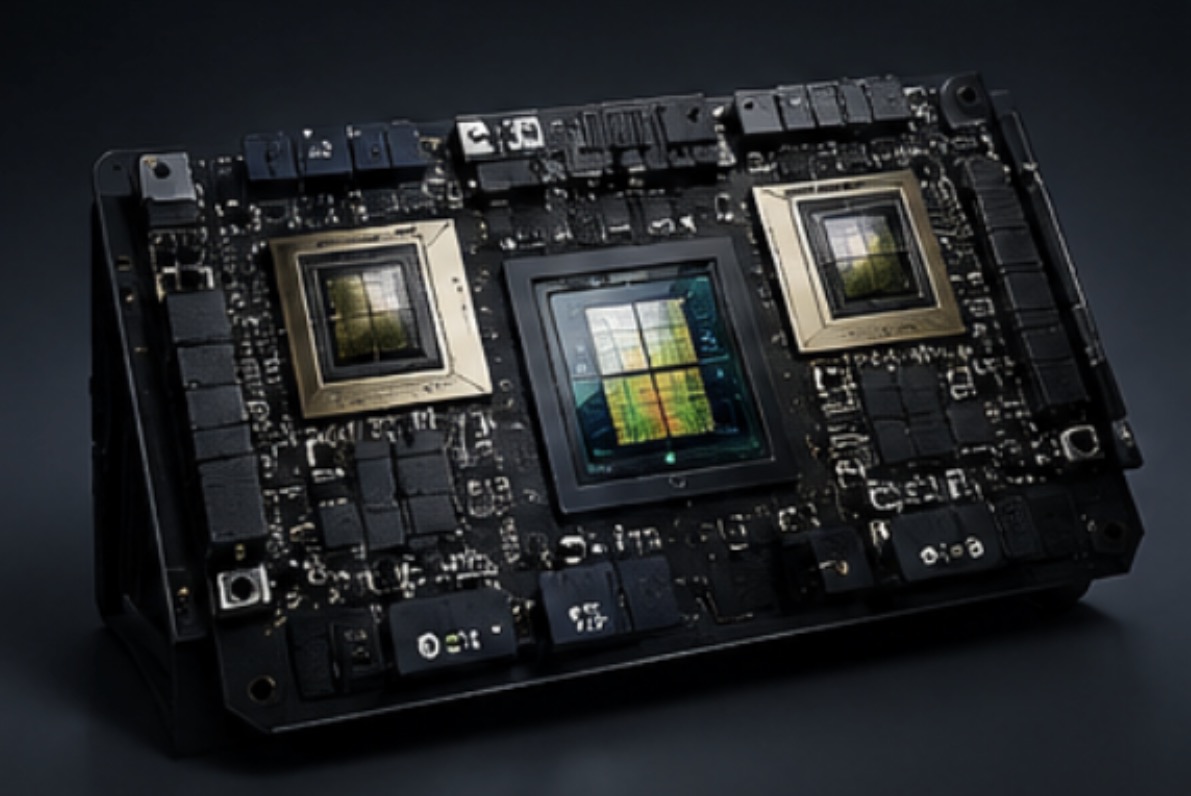
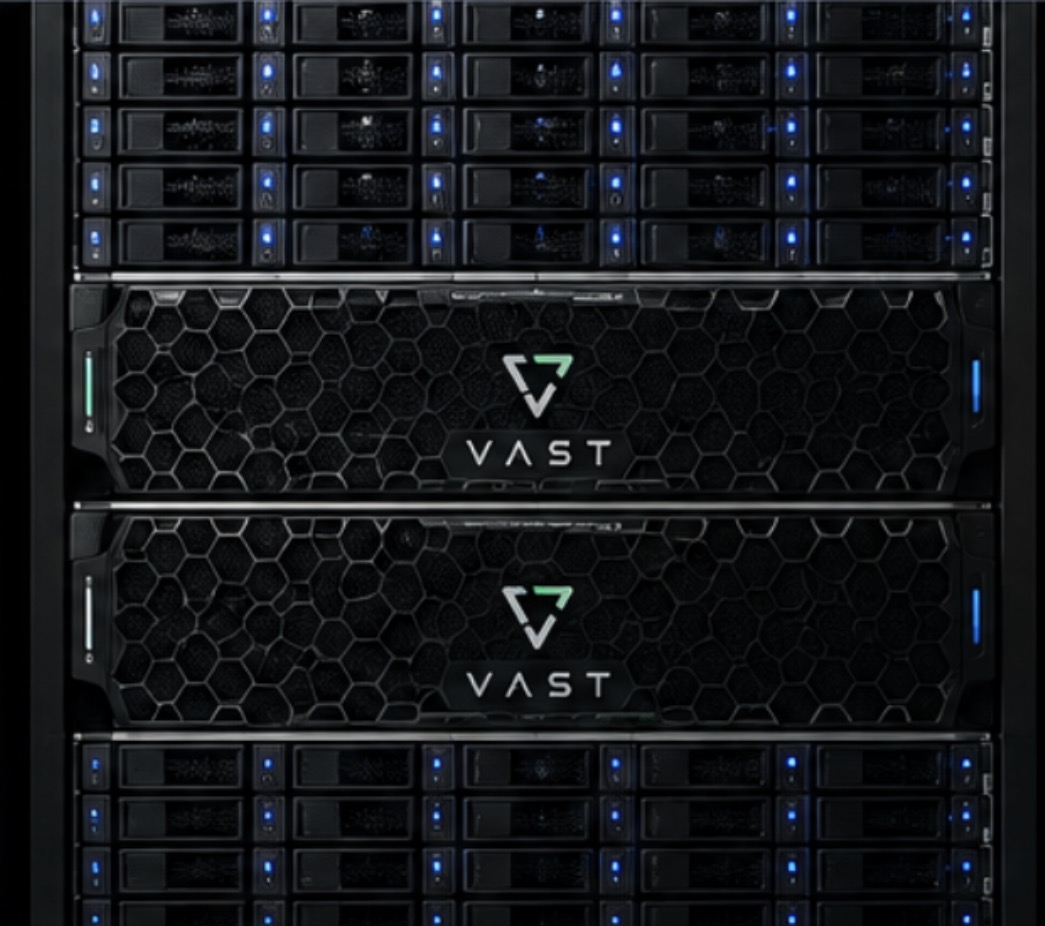
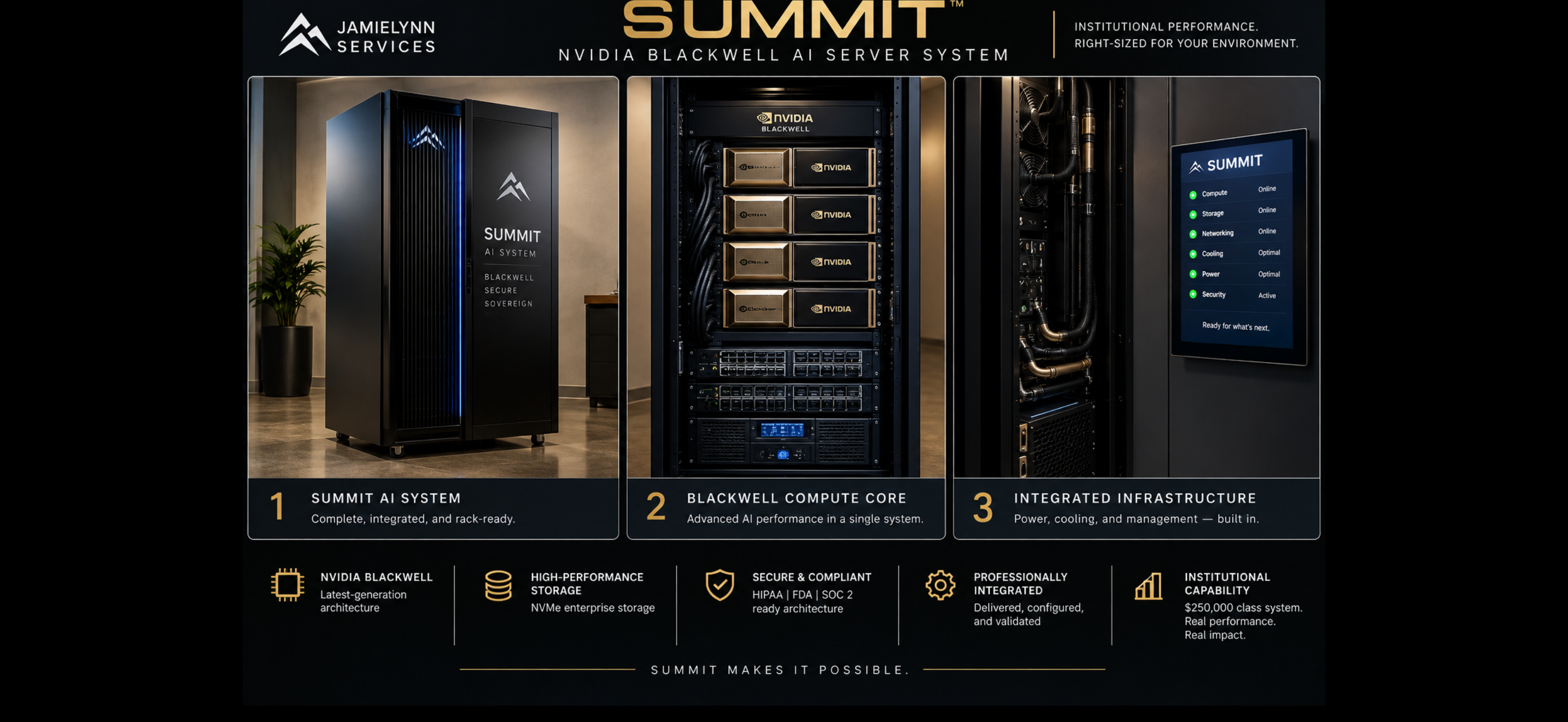
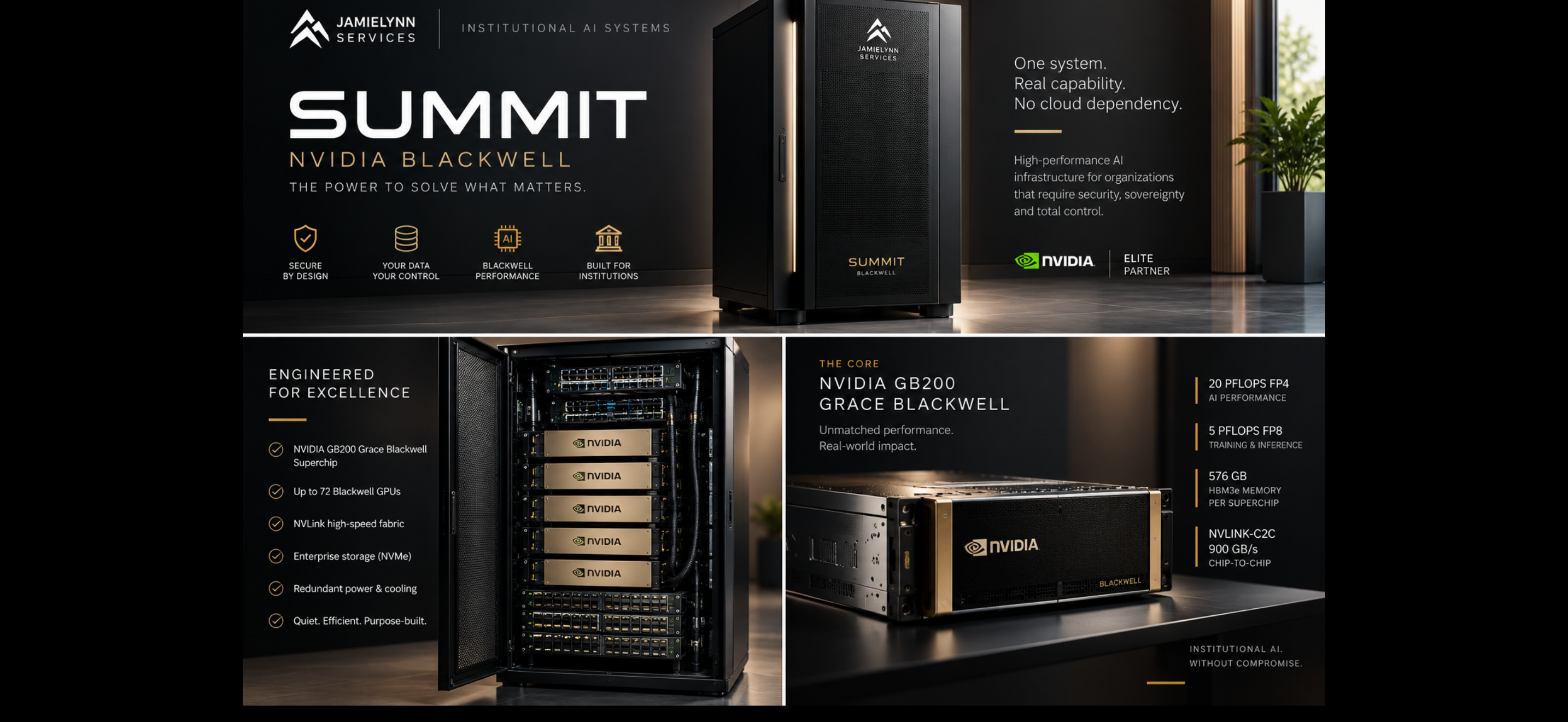
Summit is delivered as physical infrastructure inside your boundary — compute, storage, networking, and governance staged, installed, and supported as one system.
The premise
Not another month of disconnected software. A governed environment for intelligence your institution has already earned.
03 / Product architecture
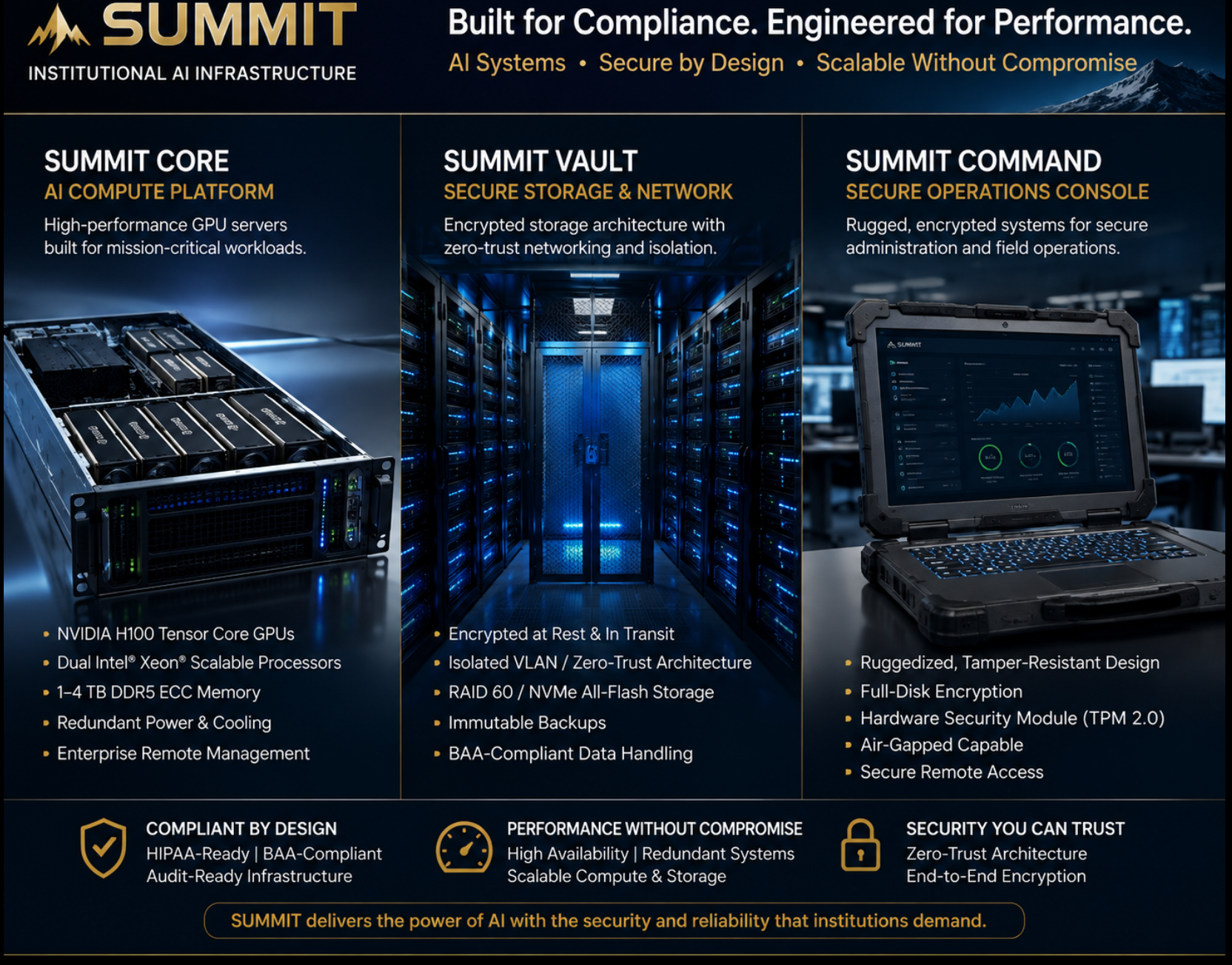
Summit brings infrastructure, software, knowledge architecture, governance, and institutional identity into one operating environment. The hardware can be replaced. The intelligence architecture is what compounds.
Concurrent retrieval, inference, ingestion, analysis, graph operations, deterministic computation, and scheduled work — without turning every useful question into a queue.
Terminology, evidence, provenance, relationships, history, responsibilities, decisions, and standards stay connected and usable.
Permissions, authorities, boundaries, integrations, model reasoning, deterministic tools, and human review are designed around the institution.
04 / The institutional problem
An institution accumulates judgment, evidence, relationships, terminology, operating knowledge, history, decisions, standards, and context. Most systems preserve the fragments. They do not preserve the relationships that make those fragments consequential.
That intelligence should not disappear when a session ends, a vendor changes, a model is replaced, or an employee leaves.
05 / Institutional graph
The most valuable intelligence is usually what technology has never seen as a whole: relationships across people, evidence, authority, history, departments, systems, services, publications, credentials, clients, research, approvals, and outcomes.
Summit connects those elements by relationship, provenance, responsibility, chronology, authority, and context.
06 / Engineered from the institution outward
Summit begins with your systems, vendors, expertise, security requirements, processes, boundaries, language, history, and relationships. JLS determines how information moves, which sources carry authority, how provenance is retained, where computation happens, and where human judgment remains essential.
07 / Operating headroom
Summit is designed to support model families, large local models, retrieval and embedding, graph computation, memory, SQL, Python, custom applications, scheduled work, background workloads, and institution-specific systems.
08 / Durable intelligence
Your institutional intelligence should survive the technology that first carried it. Hardware, models, interfaces, and software will evolve. The graph, provenance, relationships, terminology, and history should remain valuable through that evolution.
Do not force the next person or the next system to reconstruct what the institution already learned.
Turn connected institutional knowledge into a governed operating environment for real work.
Let the architecture compound while the underlying technologies change.
09 / Trust architecture
Summit can be architected around local governance, controlled remote access, and specialized separation among users, roles, credentials, networks, systems, data, logs, and models. The deployment follows the institution's requirements and works with its internal IT, cybersecurity, infrastructure, and software partners.
10 / Engagement
A Summit engagement is custom and institution-scale. Discovery establishes the actual architecture, investment, integrations, security model, redundancy, installation, training, deployment, support, and on-site requirements.
11 / Before you ask
Both, and that is deliberate. Summit is delivered infrastructure plus the architecture work that makes it yours. Discovery establishes what is installed, how it integrates, and who operates it afterward.
They get replaced. The graph, provenance, terminology, relationships, and operating history are designed to remain valuable across that change — that is the point of the architecture.
The deployment follows your trust model. Summit can be architected for local governance with controlled remote access, and separation across users, roles, credentials, networks, systems, data, logs, and models.
No. Summit is designed to work with your internal IT, cybersecurity, infrastructure, and software partners. Human authority and review stay inside the institution.
Because it is institution-scale: infrastructure, knowledge architecture, governance, integration, installation, training, and support. Final investment is established in discovery against your actual requirements.
12 / Institution-scale investment
What should your institution be capable of next? Make history.
// SUMMIT / LONG VIEW
13 / Decision point
Tell us what your institution has earned, what it needs to preserve, and what it should be capable of next.
Discuss Summit with JLS →Product knowledge