
See the operation.
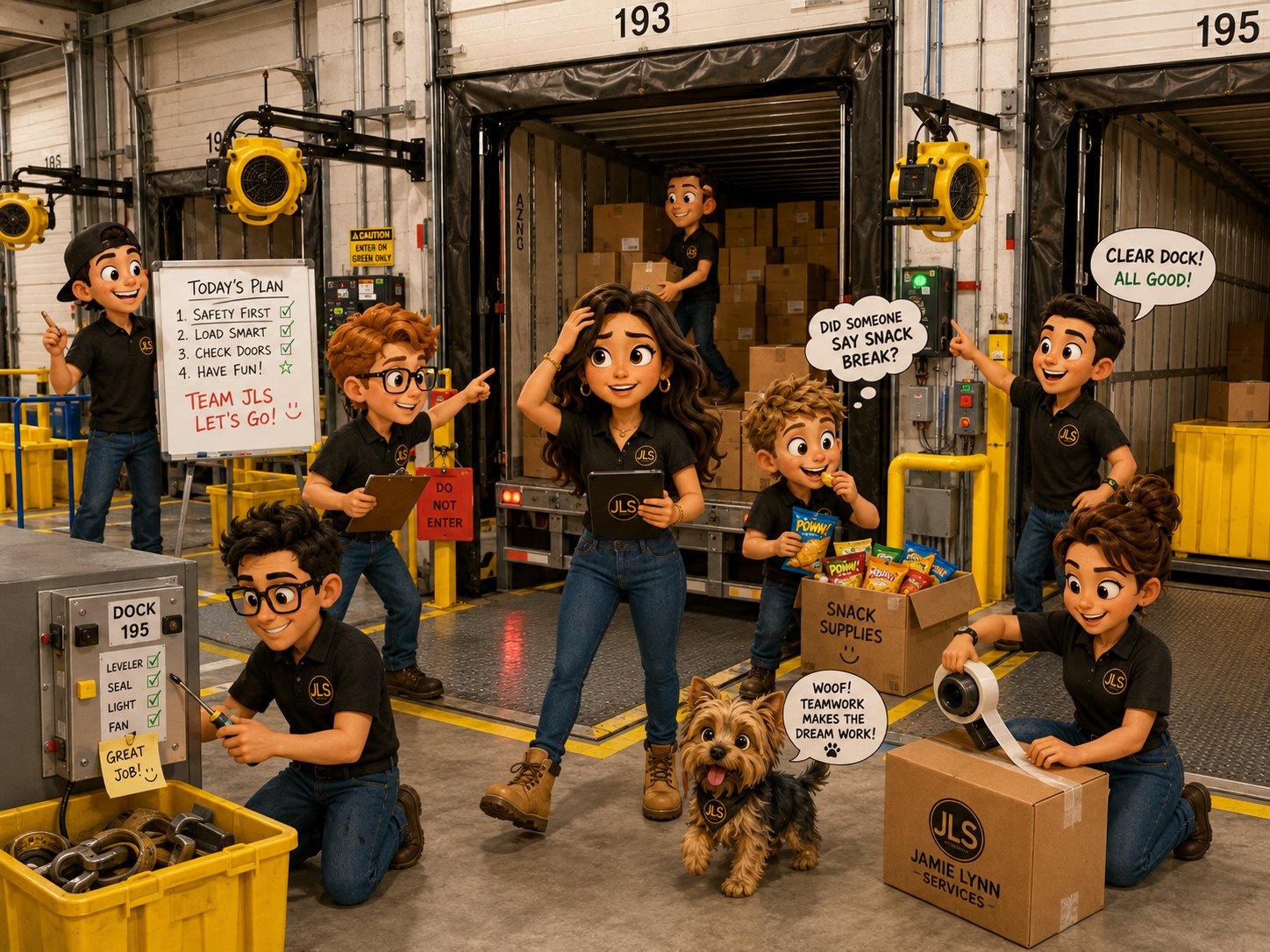
Years inside Amazon Operations shaped how we look at throughput, handoffs, capacity, defects, signals, and the difference between a process on paper and a process people can actually run.
Company / Who We Are
Jamie Lynn Services builds products and services for organizations that need their work, knowledge, and decisions to hold together.
We are a family. We learned this on a dock, in a clinic, and at a kitchen table covered in sticky notes.
01 The work behind the work
We do not start with a software category. We start with the work, the people doing it, the information it depends on, and the constraint that keeps moving.
Years inside Amazon Operations shaped how we look at throughput, handoffs, capacity, defects, signals, and the difference between a process on paper and a process people can actually run.
Tools are useful when they help people decide, remember, coordinate, and move. The interface is part of the operating system, not decoration around it.
Knowledge that cannot be found, checked, or updated becomes another hidden constraint. We build structures that preserve evidence and make the next correction easier.
02 Where the perspective came from
Jamie Lynn Services carries an operating perspective across commerce, healthcare, software, and institutional knowledge.
Jamie Lynn Schallert spent eighteen years operating Capital District Clinic, an outpatient mental-health clinic in Albany, New York, after building an earlier foundation in the United States Army and Amazon Operations. That experience continues through ecommerce, seller operations, and the design of practical intelligence systems.
Eighteen years of intake, scheduling, records, billing, licensure, audits, and clinical documentation is not a line on a resume. It is where the whole method came from — because in that building, the difference between a documented process and an operating one had consequences for real people.
Our work is shaped by the same question in every environment: what would make this easier to understand, easier to operate, and harder to lose?
03 The table
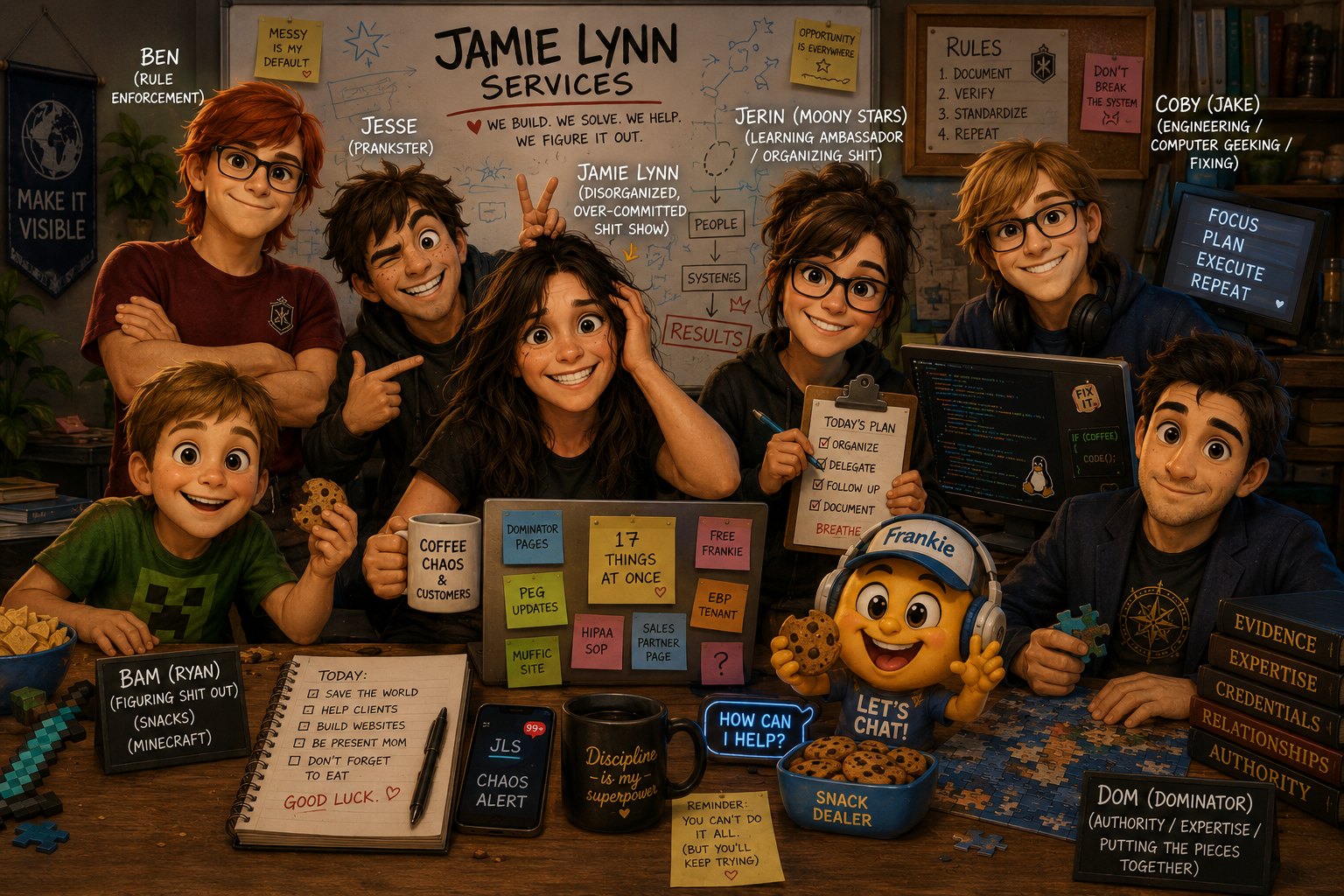
Most of this gets figured out at one table, with too many browser tabs open and someone eating the last of the snacks.

04 How we build
The method is practical: understand the current state, design the bridge, build the useful part, and verify what changed.
Listen to the people doing the work and locate the point where information, ownership, capacity, or decisions stop moving.
Organize the records, workflows, models, controls, and evidence so the system can be used by more than the person who built it.
Ship something people can use, measure the result, and leave the organization with a stronger operating surface.
05 Why it matters to us
Every product here started as a problem we had ourselves, in a building, on a deadline, with real consequences.

A family business has one advantage that does not show up on a capability statement: nobody here can hide from the result. If a system is confusing, we are the ones who have to operate it on a Sunday.
That is why the work looks the way it does. Documentation that someone will actually open. Controls that live inside normal work instead of alongside it. Evidence that survives the person who created it.
We are not trying to sell you software. We are trying to leave your organization more legible than we found it.
What would make this easier to understand, easier to operate, and harder to lose?
// THE QUESTION IN EVERY ENVIRONMENT
Jamie Lynn Services / current work
Explore products, operational services, research, and field notes built from the work itself.