
Stop repeating.
Retain the decisions, references, and operating knowledge people should not have to reconstruct every time.
Company / Our Focus
We focus on the space between what an organization knows and what its people can reliably use.
Operations. Process. Compliance. AI systems. People. Real-world experience. In that order, and always in that order.

01 What earns attention
Our focus is not novelty. It is the point where memory, ownership, process, capacity, or evidence stops moving.
Retain the decisions, references, and operating knowledge people should not have to reconstruct every time.
Make work, handoffs, exceptions, and bottlenecks visible enough to improve.
Remove the unnecessary mental and administrative load so people can do more of the work that matters.
02 The stack
Every engagement draws on the same six. We do not take work that requires us to pretend about a seventh.
Throughput, queues, handoffs, capacity, constraints, and the difference between the process on paper and the one people run.
Lean Six Sigma discipline applied to real operations — mapped, validated, and maintained rather than written once and shelved.
Controls connected to responsible people, usable evidence, and review cadence — not a binder that satisfies nobody under inspection.
Governed environments, controlled context, reviewable analysis, and a human who still holds the decision.
Systems are used by humans under pressure. If it does not survive a bad Tuesday, it is not built yet.
Eighteen years running a clinic, years inside Amazon Operations, and a warehouse floor. We have had to live with our own recommendations.
03 Where the focus comes from
The reason we look for constraints instead of features is that we spent years being on the receiving end of features.

Somebody who has never worked a shift will optimize a dashboard. Somebody who has worked the shift optimizes the handoff at 4:40 when the trailer is late and the information did not arrive with the load.
That is the difference in where we point. The interesting problems are almost never in the software — they are in the seam between two teams, the queue nobody owns, and the record that was never updated because updating it was somebody’s twelfth priority.
So we start where the work is, with the people doing it, and we follow the constraint until it stops moving.
04 The method
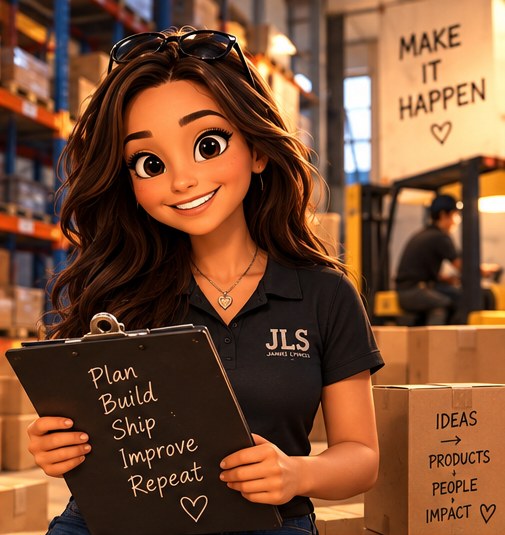
Ideas become products, products serve people, and people produce the impact. Every step has to survive the next one.
Learn the operation, the people, the evidence, and the decision that actually needs to get easier.
Deliver something people can operate now, rather than a complete architecture nobody has tested against a real week.
The first version teaches you what the second one needs. Systems built to be corrected outlive systems built to be right.
05 What it looks like
The focus shows up as people who can do the work, in the environments where the work happens.
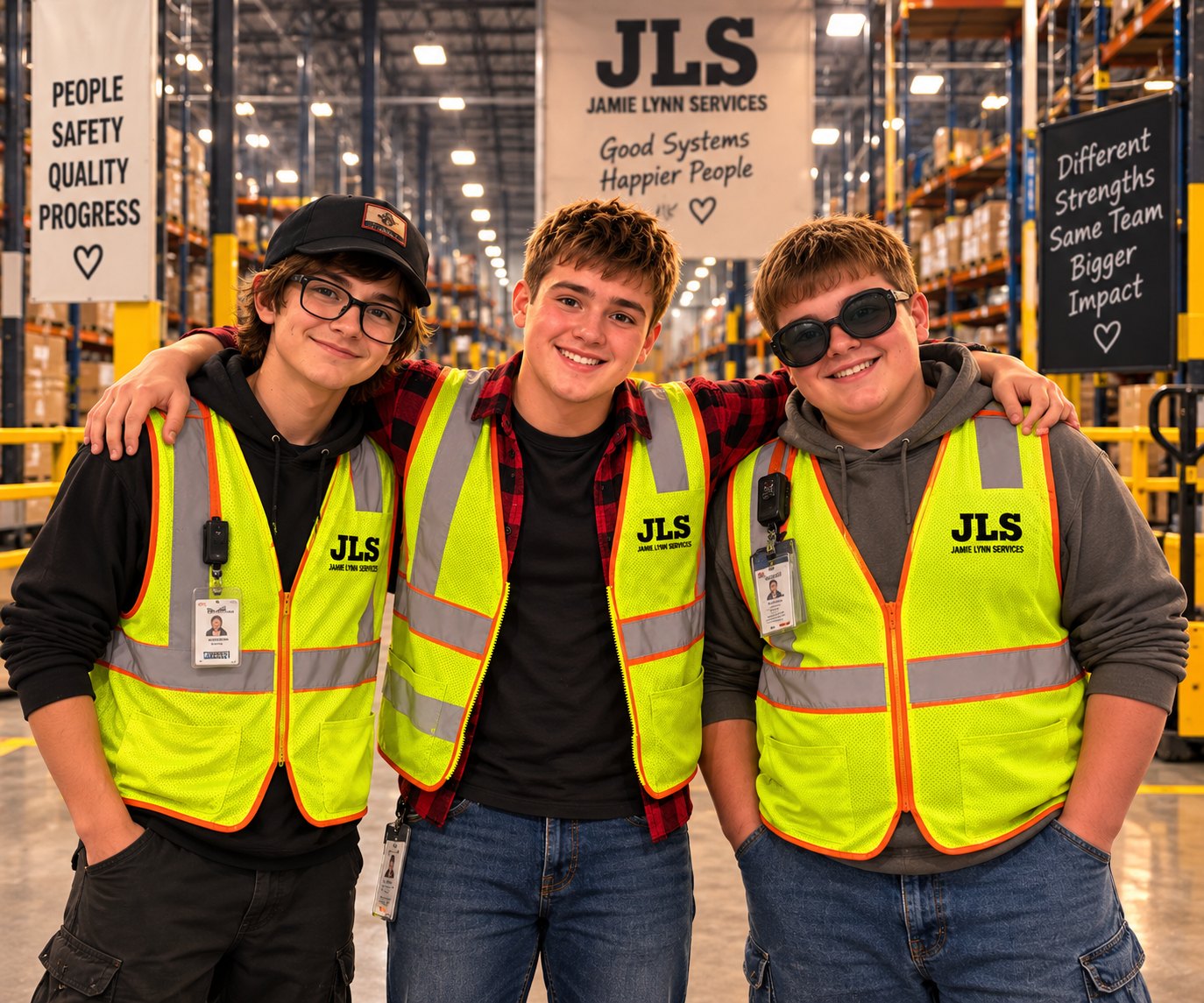



Systems keep people moving.
// THE ONLY JUSTIFICATION WE ACCEPT FOR BUILDING ANYTHING
06 What we do not focus on
A focus that includes everything is not a focus. Here is where we are deliberately not useful.

Jamie Lynn Services / our focus
Tell us where the work stops moving. That is the conversation we are best at.