
Assume the system.
Start from the belief that a capable person hit a badly designed condition. That assumption is almost always correct, and it is the only one that produces a fix.
Company / Leadership
The people with their boots on the ground and their hands in the work are the ones who need support. Everything above them exists to remove what is in their way.
Everybody is a leader. Everybody is an owner. Truly — not as a poster.
01 Who supports whom
If you lead here, your job is to clear the path for the people doing the actual work — not to review them from a distance and call it management.
The frontline is where the operation actually happens. Everything else — every system, every meeting, every dashboard, every one of us with a title — exists to make their day work. When we forget that, the org chart starts pointing the wrong direction and the work gets harder for the people least able to change it.
So we ask a different question in reviews. Not how did they perform, but what did we fail to give them. A person struggling inside a system we designed is telling us something about the system.
This is also why the numbers come second. Not because they do not matter — they matter enormously — but because they are the output, and you cannot manage an output directly. You manage the conditions that produce it.
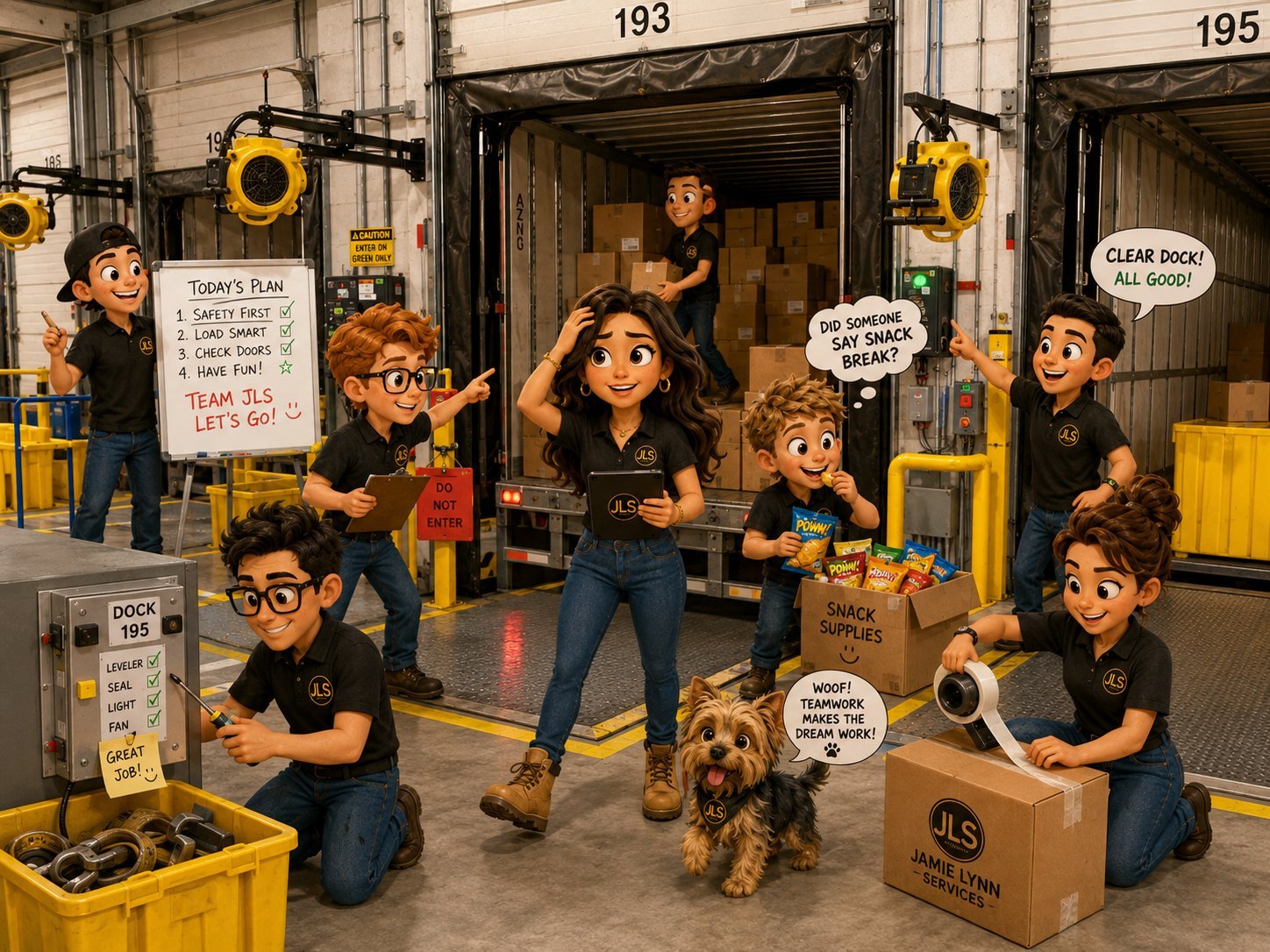
02 Quality is a habit
When we are compassionate, when we are respectful, when we teach and we learn — that is what improves quality. Everything else is downstream of it.
Start from the belief that a capable person hit a badly designed condition. That assumption is almost always correct, and it is the only one that produces a fix.
People who are treated as owners of the work behave like owners of the work. People who are policed learn to hide the things you most need to see.
The person on the line knows things the person with the title does not. A team that teaches and learns has already built its own improvement loop.
03 The throughput argument
This is not a soft claim. It is an economic one, and it is the reason we run the shop this way.
The highest throughput you will ever get is when the team has positive energy, there are no quarrels on the floor, and everybody’s needs are met. That is when the work moves. That is also when the environment gets safer, because people who are not depleted take more care — and people who take pride in their work protect it.
It is more economic to let people work in a good mood than to grind them hard. A ground-down team produces defects, injuries, turnover, rework, and silence — and every one of those costs more than whatever the grinding bought you.
Nobody has to be here. That is a real thing we say out loud. If this is not the right place for someone, attendance takes care of itself as a natural consequence. We do not need to manufacture pressure to find that out.
04 Step off the floor
This is the one rule that surprises people, and it is the one that protects everybody else.

If you are in a bad headspace, step off the floor. Go scroll your phone, get some air, do whatever resets you — genuinely, please go do that. Change the dialogue in your head before you bring it back to the team.
Everybody is allowed to have a bad day. Nobody is allowed to hand it to eleven other people. A negative mood moves through a floor faster than any process change we could design, and it takes the shift down with it.
So the standard is simple: you may not work in a bad mood. Not because feelings are unwelcome, but because the floor is shared. Take the time you need. We will catch the slack — because next time it will be one of us.
05 The belief principle
They miss it for lack of enough people believing in them to make them believe in themselves.
We hold this seriously, not sentimentally. When someone does not reach a goal, that is not a shortfall in the person. It is a shortfall in the support system around them — and that support system is also made of humans, who also need support. The failure, if there is one, is structural and it belongs to all of us.
Everyone is capable of anything they want with the right supports and the right belief system behind them. We all need support differently. Some people need information, some need time, some need somebody to say out loud that they can do it. The job of leadership is to figure out which, and then supply it.
With the right support, the ceiling disappears. That is not a motivational line — it is the operating assumption we hire on, train on, and correct on.

We all need support differently.
With support, the sky is the limit.
// THE BELIEF PRINCIPLE
06 Everybody is an owner
Ownership here is not equity language. It means the work is yours, the standard is yours, and nobody is waiting to be told.




Everyone brings something the others do not have. Somebody enforces the standard. Somebody breaks the tension. Somebody organizes the chaos into a list. Somebody fixes the thing nobody else can fix. None of those is more valuable than the others, and a team missing any one of them runs worse.
That is what we mean by ownership. Not a title — a responsibility you would not hand off even if someone offered to take it.
07 Jamie Lynn Schallert
Experience across the United States Army, Amazon Operations, healthcare operations, ecommerce, software, and applied intelligence systems.
The people doing the work know where the system is asking too much of them. They are usually waiting for someone to ask.
Translate the constraint into a structure that can actually be used and maintained by the people who have to live in it.
Delivery is not the end. The result must be understandable, supportable, and open to correction.

Jamie Lynn Services / leadership
That is the whole standard. Everything else on this page is how we make it possible for somebody to actually do it.