
The relationship stays yours.
Tools support the people who own the customer relationship. They do not quietly take it away, meter it, or hold it hostage on renewal.
Company / Difference
Every system we build assumes a human being is still responsible for the result — because in the work that matters, one always is.
Lean Six Sigma discipline. A closely knit shop. No fault, only progress.

01 No fault, only progress
When something goes wrong, the interesting question is never who. It is what let it happen, and what has to change so it does not happen again.
Lean Six Sigma taught us this as a method, but eighteen years of running a clinic taught it as a habit. A person making an error inside a badly designed process is not the problem. The process is the problem, and it was almost certainly designed by someone who is no longer in the room.
So we do not open with fault. We open with the operating condition — the handoff that lost context, the queue nobody owned, the information that arrived incomplete. Findings connect to structure, not to people.
This is not softness. It is the only approach that actually produces a correction. Teams that fear blame hide variance, and variance you cannot see is variance you cannot fix.
02 Company culture
Anyone here can call an NQA whenever they need one. Nobody asks why. The rest of us pick up the slack, because next time it will be us.
It is the single policy that tells you the most about how this company works. It only functions in an organization where people trust each other, and it would collapse in about a week anywhere that did not.
It does not get abused. That is the part people find hard to believe, and it is the part that matters. When you treat people as adults who understand what the work requires, they behave like adults who understand what the work requires.
The same assumption runs through everything we build for you. Systems that trust the operator produce better information than systems that police them — because the operator stops hiding things from the system.
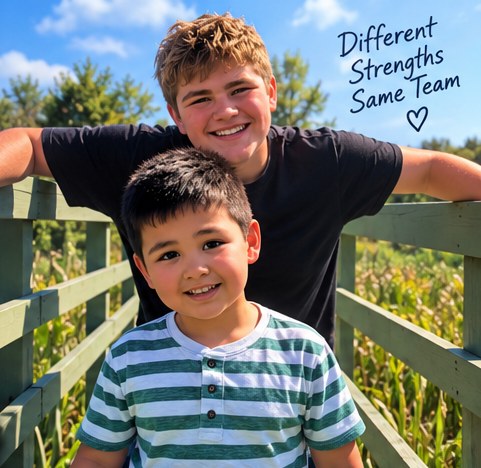
03 The human stays
The internet made it possible to serve more people than ever, and somewhere in that scaling the relationship quietly became optional. We build the other way.
Tools support the people who own the customer relationship. They do not quietly take it away, meter it, or hold it hostage on renewal.
Our systems accelerate retrieval and analysis. They do not take the decision. Review stays where the responsibility already sits.
Evidence, provenance, and operating history are built to outlast the person who created them and the vendor who first stored them.

Scale is not the enemy. Anonymity is. A system can serve a thousand people and still know who it is talking to, still leave the judgment with someone accountable, still let a customer reach a person who remembers the last conversation.
Most software makes the opposite trade because it is cheaper. We think it is the reason so many organizations feel like they are being operated rather than served.
04 The method
Lean Six Sigma without the theater. We start with the operating problem, not the software label, then build the smallest structure that can carry the work forward.
We learn how the work actually happens before deciding what to build. The category comes last, if it comes at all.
Findings are traced to something checkable. A confident recommendation without a basis is just a preference in a nicer font.
A system is stronger when its evidence, decisions, and next correction can be found again by someone who was not there.
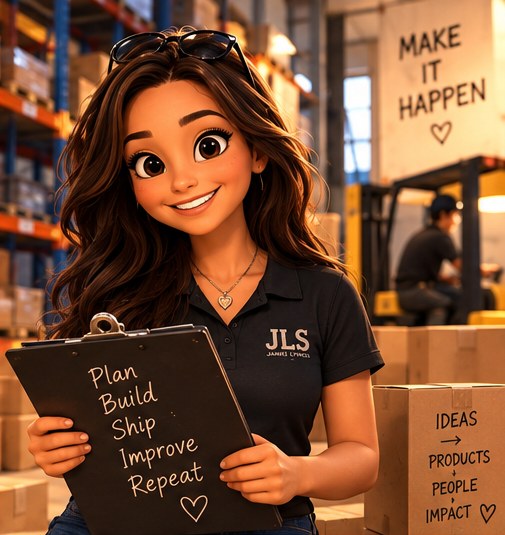
05 What the systems are for
Every product in the catalog exists to remove a constraint from somebody’s actual day. That is the only justification we accept for building anything.

A good operating system is not the one with the most features. It is the one that lets a shift start on time, a clinician find the record, an approver make the call, and a new hire understand the work without shadowing someone for a month.
We measure ourselves on whether the work got easier — not on how impressive the architecture diagram looks. If a system is confusing, we are the ones who have to operate it on a Sunday.
That is the advantage of being small, closely knit, and family-run. Nobody here can hide from the result.
Good ideas. Good people. Bright future.
// SAME HUMAN, BRIGHTER TOMORROW
06 The long view
That changes what you are willing to ship. Shortcuts that work this quarter are somebody’s problem in five years, and around here that somebody has a name and eats dinner at this table.



Jamie Lynn Services / the difference
Bring the operating problem. We will bring the method, the evidence, and a human being who answers the phone.